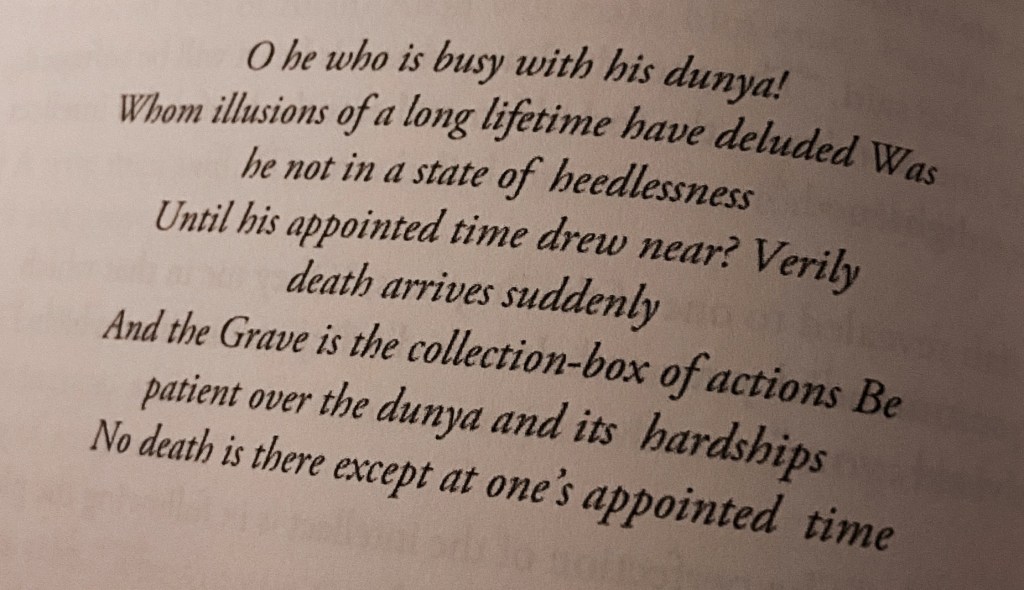
THE BITTER (or) SWEET TASTE OF DEATH
The Prophet ﷺ told us:
لِكُلِّ شَيْءٍ سَنَامٌ
“Everything has its pinnacle” but what is the pinnacle of our lives? For the righteous believer, it is death itself; the summit of a life lived with purpose, where every struggle and deed converges in a single, brief separation of body and soul. Those who held onto their Īmān in every aspect of life, death is the peak of a mountain they had been climbing since birth, walking its rocky path which led to the highest of destinations; a place where they embrace death as though they have met an old friend.
As for those distracted by the fleetingg desires of this world, death arrives as a thief, snatching the soul before it is prepared to leave. Their misguided journey led them to linger in the darkest valleys, far from the peaks occupied by those with higher aspirations. In reality, theres was more of a blind wander than a journey, straying from the marked route because they favoured an easier path scattered with temporary pleasures.
Death arrived unannounced to both types of people, the difference being that the first group anticipates its arrival whereas the other hopes it will never knock on their door. Which group will we be from?
LONGING FOR DEATH
It was in the stillness of the last few nights of Ramadan, my forehead firmly pressed against the ground in sajdah, that I first felt a deep longing for death. In that moment of closeness to Allāh, I whispered a Du’a for my soul to be taken if Allāh was Pleased with me; not out of despair, but out of yearning to meet my Creator at what felt like the peak of my īmān. The lack of distractions, the silence of the night, the complete awareness of His Mercy; iit felt like the perfect time to bid this world farewell. Yet, as I raised my head and completed the prayer, a sobering thought crossed my mind: I am not promised a picture-perfect death. My final breath is not guaranteed to be in the midst of one of those short lived peaks of faith. Death is a guest that arrives uninvited, perhaps in the most mundane and unprepared moments of our lives.
Those short lived peaks of Īmān aren’t supposed to last long, they are given to us as windows of opportunity in which good actions have been made easy. They are meant for us to capitalise on by increasing in those actions and savouring their sweetness so when our Īmān inevitably dips again, we can reflect on those peaks and continue the acts of worship in times of difficulty as we did in times of ease, rather than wallowing in self-pity and questioning why Allah is testing us, like we are too good to be treated this way. That is how the strong believers are separated from the weak. May Allah make us amongst the strong and true believers. Āmīn.
EVERY SOUL SHALL TASTE DEATH
Allah reminds us in the Qur’an of death’s inevitability and its sudden arrival when He Says:
“كُلُّ نَفْسٍ ذَائِقَةُ الْمَوْتِ ۗ وَإِنَّمَا تُوَفَّوْنَ أُجُورَكُمْ يَوْمَ الْقِيَامَةِ ۖ فَمَن زُحْزِحَ عَنِ النَّارِ وَأُدْخِلَ الْجَنَّةَ فَقَدْ فَازَ ۗ وَمَا الْحَيَاةُ الدُّنْيَا إِلَّا مَتَاعُ الْغُرُورِ”
“Every soul shall taste death, and you will only be given your [full] compensation on the Day of Resurrection. So he who is drawn away from the Fire and admitted to Paradise has attained [his desire]. And what is the life of this world except the enjoyment of delusion?” (Surah Aal-e-Imran, 3:185).
This Ayah serves as a reminder that life is fleeting; a mirage that distracts us from our true, eternal abode. We spend the majority of our days chasing temporary pleasures forgetting that at any moment our existence in this world could end. How often do we hear about someone laughing with friends during the day, gone by nightfall. Another planning their weekend, buried in the ground before it arrives. As Imam al-Bukharī said in his lines of poetry:
اغتنم في الفراغ فضل ركوع
فعسى أن يكون موتك بغتة
كم صحيح رأيت من غير سُقم
ذهبت نفسه الصحيحة فلتة“Take benefit from free time by performing a Rukūʿ (i.e a prayer),
For your death may come suddenly.
How many a healthy person I have seen without illness,
His healthy soul being taken away, and he ceased to exist!”
It just so happened that Imam al-Bukhārī himself was from those who met death unexpectedly. Ibn Hajr mentions that as the Imām prepared to mount his horse one day, he said: “Take me, for I have become weak.” So he began to make du’a and then laid down before passing away. May Allah widen the grave of this great Imām and grant him al-Firdaus. Ameen.
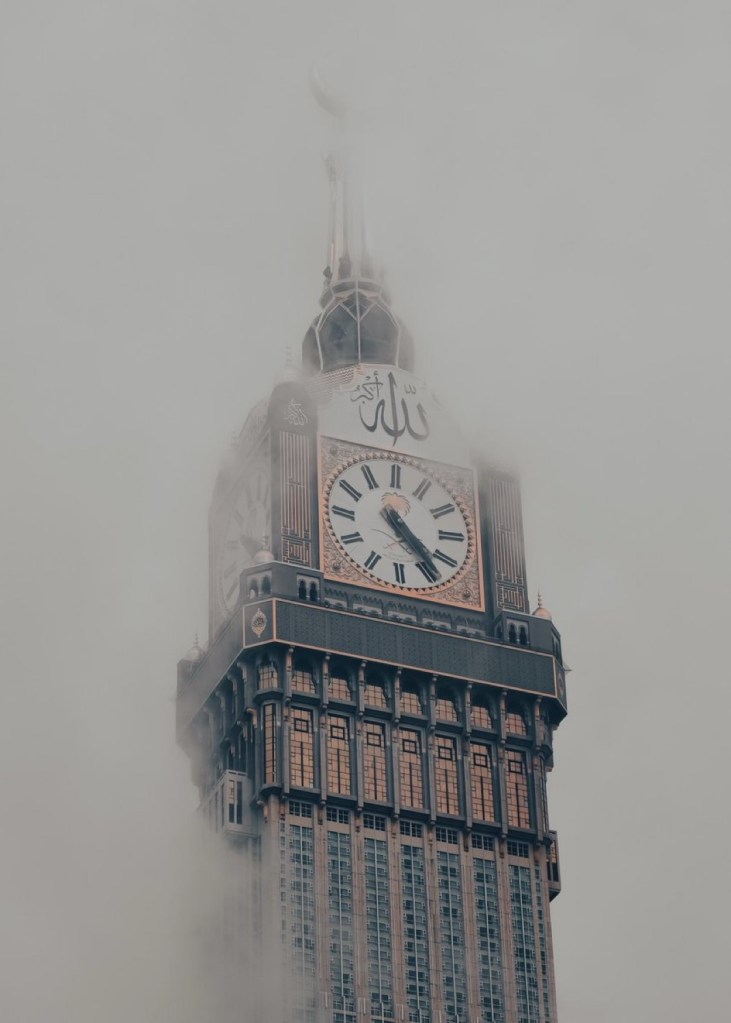
LIFE OF A TRAVELLER
The Prophet ﷺ would often remind his companions of death, urging them to keep it close to their hearts. In the narration of Ibn ‘Umar, he ﷺ said:
“كُنْ فِي الدُّنْيَا كَأَنَّكَ غَرِيبٌ أَوْ عَابِرُ سَبِيلٍ”
“Be in this world as though you were a stranger or a traveller.”
Ibn ‘Umar would add: “إِذَا أَمْسَيْتَ فَلَا تَنْتَظِرِ الصَّبَاحَ، وَإِذَا أَصْبَحْتَ فَلَا تَنْتَظِرِ الْمَسَاءَ، وَخُذْ مِنْ صِحَّتِكَ لِمَرَضِكَ، وَمِنْ حَيَاتِكَ لِمَوْتِكَ”
“When evening comes, do not expect [to live until] morning, and when morning comes, do not expect [to live until] evening. Take from your health before your sickness, and from your life before your death.” (Sahih al-Bukhari, Hadith 6416).
These words should be etched in the mind of every Muslim. They outline, in the clearest terms, how we should approach our life, and our death. The Prophet ﷺ knew of our tendency to drift and forget about the fragility of life and to assume that tomorrow is promised so he advised us to live with the mindset and urgency of a traveler, never truly settled during his journey, never feeling at home until he reaches his destination, with no attachment to the path he walks, for the journey’s end could be the next step he takes.
‘Umar ibn al-Khattab رضي الله عنه would say:
“أَعِدُّوا أَنْفُسَكُمْ لِلْمَوْتِ قَبْلَ أَنْ يَأْتِيَكُمْ، فَإِنَّهُ يَأْتِي بَغْتَةً”
“Prepare yourself for death before it comes to you, for it comes suddenly.”
His words apply to us now more than ever before, so don’t delay and don’t slacken, because the hourglass is running low, and no sand grain that falls can ever be put back in its place,.
YOU WILL DIE AS YOU LIVED
When I think back to the that sajdah, it makes we wonder: what if death had come an hour earlier or later, when my mind had drifted and my heart was distracted by the dunya? As ‘Umar ibn al-Khattab used to say:
لَا يَغُرَّنْكَ عِشَاءٌ سَاكِنٌ … قَدْ تُوَافَى بِالْمَنِيَّاتِ السَّحَرْ
“Do not be deceived by a calm evening, for death may come at dawn.”
These words break the false sense of security we wraf ourselves in, fooled by the false promise of tomorrow. The tranquility of a peaceful moment like that sajdah can be blinding, making us forget that death does not announce its arrival. It strikes swiftly without warning.
Consider every single breath as a step closer to your grave, and you will realise how often we waste these breaths gossiping and talking about useless things. We dream of dying in worship, on Jumu’ah, in Ramadān, or in the state of Ihrām, but the reality is, as Abdullah ibn Mas’ud (may Allah be pleased with him) warned:
مَنْ مَاتَ عَلَى شَيْءٍ بُعِثَ عَلَيْهِ
“The one who dies on something will be raised on it.” (Musnad Ahmad, Hadith 3844)
If we spend the majority of our lives in a state of heedless, we increase the chances of dying in that same state, and thus risk being resurrected as such. That thought should be enough of a reminder to use every second we have in this temporary life to improve our hereafter. Every single moment we wasted in these few days we have left will be a source of regret for us, so change while you still have the chance.
Allah informs us of the immense regret for those caught unprepared:
“حَتَّىٰ إِذَا جَاءَ أَحَدَهُمُ الْمَوْتُ قَالَ رَبِّ ارْجِعُونِ لَعَلِّي أَعْمَلُ صَالِحًا فِيمَا تَرَكْتُ ۚ كَلَّا ۚ إِنَّهَا كَلِمَةٌ هُوَ قَائِلُهَا ۖ وَمِن وَرَائِهِم بَرْزَخٌ إِلَىٰ يَوْمِ يُبْعَثُونَ”
“Until, when death comes to one of them, he says, ‘My Lord, send me back that I might do righteousness in that which I left behind.’ No! It is only a word he is saying; and behind them is a barrier until the Day they are resurrected.” (Surah Al-Mu’minun, 23:99-100).
Imagine the anguish of that person pleading for one more chance, one more prayer, one more tear shed in repentance. But the door is shut. Now put yourself in his shoes and realise that right now you are in the same position which he would sacrifice his parents and children for; you’re still able to pray, repent and do good, so make the most of it before it’s too late. This Ayah is a wake-up call from Allah to his servants, urging us to mend our ways now, because as the saying goes, ‘tomorrow never comes.’
PREPARE FOR DEATH
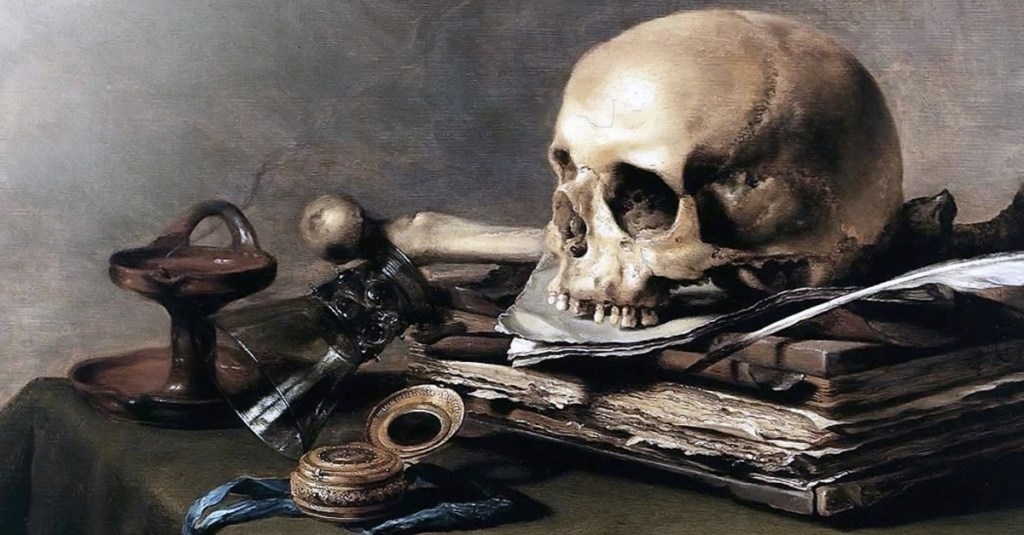
So how do we prepare? The Prophet ﷺ gave us the antidote:
أَكْثِرُوا ذِكْرَ هَادِمِ اللَّذَّاتِ
“Remember often the destroyer of pleasures (death).” (Sunan al-Tirmidhi, Hadith 2307)
Keep the reality of death in your heart as much as you can; as though it walks behind you with every step you take. For even if you are heedless of it, know that death is never heedless of you. For the believer, death is not a distant idea or a mere thought; it is a decree carried out by one of Allah’s greatest Angels; one that all of us will one day encounter, and one that visits you throughout the day as mentioned by al-Hasan al-Basrī who said:
“There is no day in which the Angel of Death does not visit every house three times. Whoever he finds has completed their provision and whose lifespan has ended, he seizes their soul.
So when his soul is taken, his family comes forth with wailing and crying and the Angel of Death stands at the door and says:
‘By Allāh, I have not eaten from his provision, nor have I exhausted his lifespan, nor have I shortened his appointed time. Indeed, I shall return to you time and time again until I leave none of you behind.’
By Allāh, if they could see his presence and hear his words they would be struck with awe and forget about their deceased and instead they would weep for themselves.”
So don’t push death aside thinking that it only afflicts those who have reached old age; let it sit with you as a reminder guiding you back to Allah and preventing you from your desires, rather than treating it as a shadow that you can’t shake off. Renew your īmān daily, seek forgiveness, guard your prayers, soften your heart with dhikr. ‘Ali ibn Abi Talib رضي الله عنه said:
“إِنَّ الدُّنْيَا قَدْ أَدْبَرَتْ وَتَنَكَّرَتْ، وَإِنَّ الْآخِرَةَ قَدْ أَقْبَلَتْ، وَلِكُلٍّ مِنْهُمَا بَنُونَ، فَكُونُوا مِنْ أَبْنَاءِ الْآخِرَةِ وَلَا تَكُونُوا مِنْ أَبْنَاءِ الدُّنْيَا”
“The life of this world has turned its back on us and is departing, while the Hereafter is coming toward us. Each has its children, so be among the children of the Hereafter, and do not be among the children of this world.” (Sahīh al-Bukhārī)
So let us strive to make every moment of our lives a step towards Allah and not a step away from Him. Cry and repent to Him now because Wallāhī death is nearer to you today than it was yesterday, and when it finally comes, whether that is today or in 50 years time, no fortress can protect you from what Allāh has decreed. And remember, the calm of this current moment is no promise of safety; you will be questioned about what you did with these moments. Will you squander it in heedlessnesss, chasing fleeting pleasures, or will you make the most of it to prepare for the meeting with Allāh?
For me, that sajdah was a glimpse of what could be, but it was also a warning. We are not guaranteed a death draped in piety, lifting our finger to the sky whilst we utter the Shahadah with our loved ones beside us. It might come whilst driving, mid-argument, or in the depths of our sleep. How many ‘unexpected’ funerals have we attended where the deceased was perfectly healthy only a few hours prior to their burial. So how can we attend these funerals and listen to these stories yet keep on living heedlessly as if the same cannot happen to us, as if we have been promised a long life and a good death. It was this same mindset that confused Abu Dardā رضي الله عنه who saw the family of a deceased person crying at the burial, and he said:
“مساكين!، موتى غداً يبكون على ميت اليوم”
“Poor things! They are the dead of tomorrow weeping over the dead of today!”
His amazement wasn’t at the fact that they were crying at the death of their loved one, rather it was due to the fact that we do not cry at the thought of our own deaths which should be a much bigger concern as we do not know how we will die, in a state of Īmān or kufr.
Similarly a poet said:
عجبت لمن يبكي على موت غيره…
دموعا ولا يبكي على موته دما
“I am amazed by one who cries tears for the death of others,
yet does not weep blood for his own approaching death.”
My sincere advice to myself and to you is to repent now, because not even your next breath is guaranteed, let alone tomorrow. Correct and learn your ‘Aqīdah, and prioritise this, for it is the highest of knowledge, and that which will ultimately save you, and once the foundations are set, pray your next prayer as if it is your last, and if it is not your last, then keep doing the same for every prayer until you do reach your final chance to bow in submission to Allāh. After you have implemented this, be consistent in doing those other actions that have been made easy for you whether that is seeking beneficial knowledge, fasting, reading Qur’an etc. and do not give it up once you have started.
Prepare for your return before the calm evening fades into an eternal dawn, إمَّا إلى الجنَّةِ وإمَّا إلى النَّارِ
And finally:
وَلَا تُرْجِ فِعْلَ الْخَيْرِ يَوْمًا إِلَى غَدٍ …
لَعَلَّ غَدًا يَأْتِي وَأَنْتَ فَقِيدُ
“Do not delay the deeds of today till tomorrow…
For tomorrow might come when you are gone.”
 Stranger Thoughts // أفكار غريبة
Leave a comment